Lessons from a 56-Route Day
Sometimes the best gear tests aren’t planned. They happen when the stakes are real, the pace is high, and there’s no time to overthink.
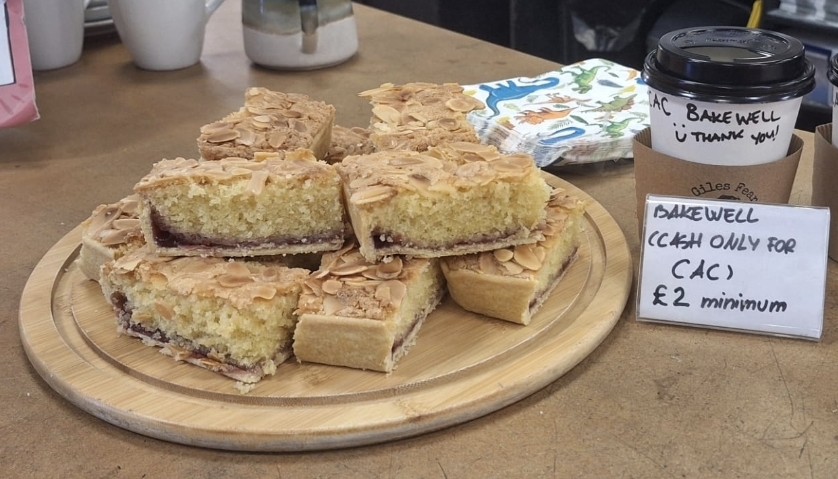
At Awesome Walls Sheffield, I found myself in exactly that situation — not as the climber, but as the belayer. My partner, Cristal, had taken on a serious challenge: 56 routes in a remarkable five hours of sustained effort, marking what would have been the age of her late partner, Giles. It was a deeply personal tribute first and foremost, with donations collected for Climbers Against Cancer.
To make the most of the day, we worked in blocks of five. That structure made things more manageable for both of us and created the opportunity for it to be more than just support. It became a chance to put a range of belay devices through sustained, real-world use — in some cases, only my second time using them since my RCI training. While Cristal reset between climbs, we’d take a moment to set up the next device properly, making sure we both understood how it operated and were happy with it before continuing. It kept things safe, consistent, and gave each device a fair test, with the ATC as the default when we wanted to keep things moving quickly.
Supporting on a day like this isn’t passive. It’s constant — feeding rope, taking in slack, managing lowers, staying sharp. Over 56 routes, small inefficiencies don’t stay small for long. They build, they compound, and they start to matter, which made it the perfect environment to really pay attention to the details.
What Actually Matters Over 56 Routes
Rotating devices every five routes gave me a consistent way to compare them under pressure — same climber, same wall, same growing fatigue. What quickly became obvious wasn’t anything flashy, just the fundamentals done well.
- Smooth rope feed matters more than anything
- Predictable braking beats clever design
- Lowering efficiency saves time and energy
- Small inefficiencies become big problems after 40+ routes
Some devices feel great for a couple of climbs. Far fewer hold up across fifty-plus.
Device Breakdown
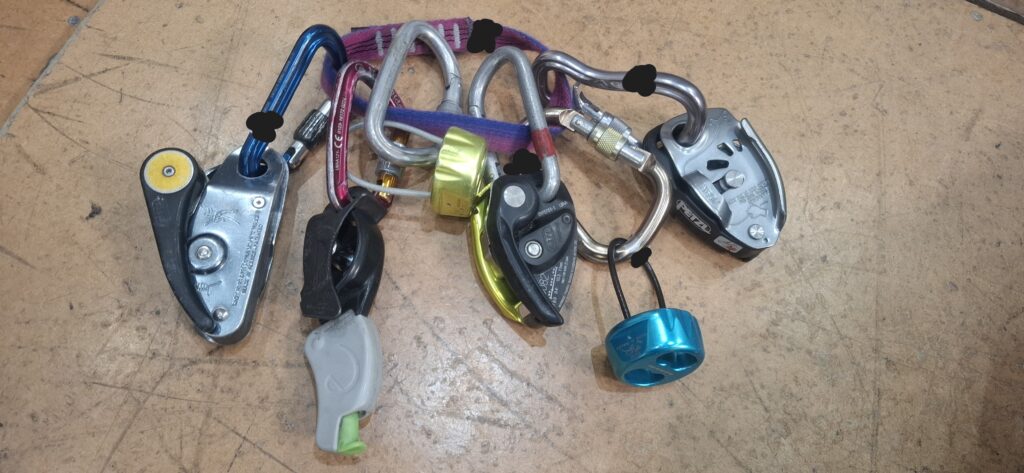
Petzl GriGri (Gen 1 & 2)
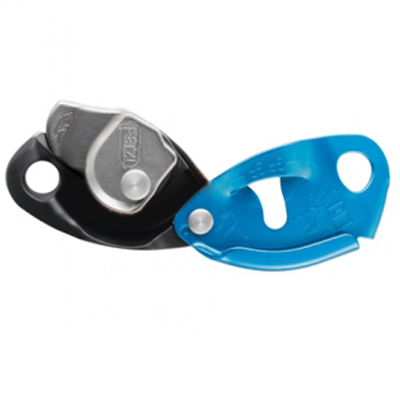
Both versions gave me exactly what I wanted in one key area: reassurance. If Cristal had fallen, I’d have been completely confident in the catch every time. That kind of consistency counts for a lot when you’re deep into a long session.
- Pros: smooth, controlled lowering and strong confidence on the catch
- Cons: tends to lock up when paying out quickly, which breaks rhythm
It’s dependable and does its job well, but it can get in the way a bit when you’re trying to keep things moving at pace.
Climbing Technology Click Up
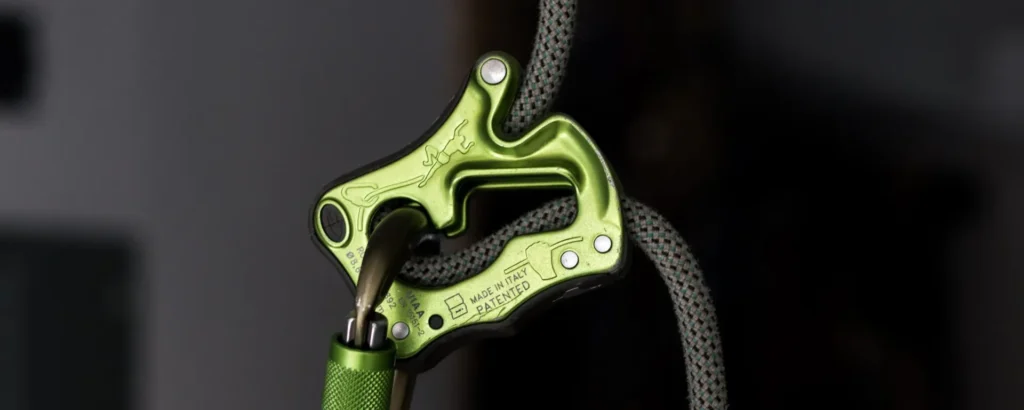
This was the one that felt most natural to me. It behaves more like an ATC, which made it easy to settle into a rhythm once I’d got the reset dialled.
- Pros: smooth rope handling, intuitive feel, easy to keep a steady flow
- Cons: lowering takes a bit more coordination, especially when tired
By the end of the day, this was the device I trusted most to just get on with the job without thinking about it too much.
Edelrid Zap-O-Mat
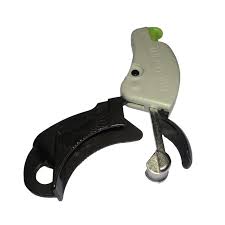
This one didn’t really land for me on the day. It’s a bit of an odd-looking device and took some figuring out, so we tested it cautiously on the first few clips before committing.
- Pros: likely has potential with more time and familiarity
- Cons: not intuitive and didn’t inspire confidence early on
In the end, it went into the “not today” pile. It deserves another go, just not in the middle of something like this.
Italian Hitch (Munter Hitch)
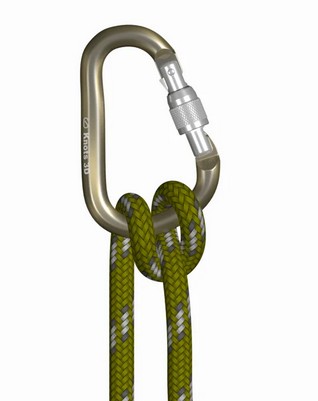
I actually really enjoyed using this more than I expected. There’s something satisfying about how simple it is — no moving parts, nothing to fiddle with, just rope and karabiner.
- Pros: quick to set up, smooth for paying out and lowering, reliable
- Cons: slower when taking in quickly due to the hitch needing to flip
It’s not ideal for high-speed gym belaying, but it’s a great option to have in the toolkit — especially in the mountains, when belaying a second from above, or as a backup if you’ve dropped your device.
Petzl Neox
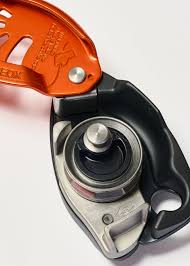
This was probably the most interesting one to use. It’s similar to the GriGri, but the addition of a wheel with a camming action makes rope handling noticeably smoother.
- Pros: very smooth rope feed, assisted-braking confidence, good for maintaining flow
- Cons: still new to me, so slightly less instinctive
It quickly settled into second place for me, just behind the Click Up. It keeps the reassurance of a GriGri but removes a lot of the friction when paying out rope.
Cris actually picked one up on the day after I mentioned it from my RCI training, and after I’d spent some time using it, she gifted it to me as a thank you. Didn’t expect that at all, and I’m incredibly grateful.
Other Kit — Belay Glasses
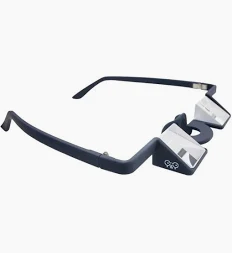
I gave these a go for one climb to see how they felt in practice. They do exactly what they’re designed for — keeping the climber in view without needing to crane your neck — and on that front, they worked well.
What I did notice, though, was a drop in my awareness of everything else going on around me. My depth perception felt slightly off, and I didn’t feel as tuned in to the wider environment, which matters in a busy wall.
They definitely have their place, and I can see why people rate them. That said, they do give you a slightly different perspective at times… which can catch you off guard if you’re not paying full attention. For me, they’re not something I’d choose to use regularly.
Final Thoughts
This wasn’t just a gear test.
Cristal climbed all 56 routes in five hours as a tribute to her late partner — and that’s the real story of the day.
But being on the other end of the rope gave me a different perspective. Over that many routes, gear stops being theoretical — you feel every inefficiency, every hesitation, every small advantage.
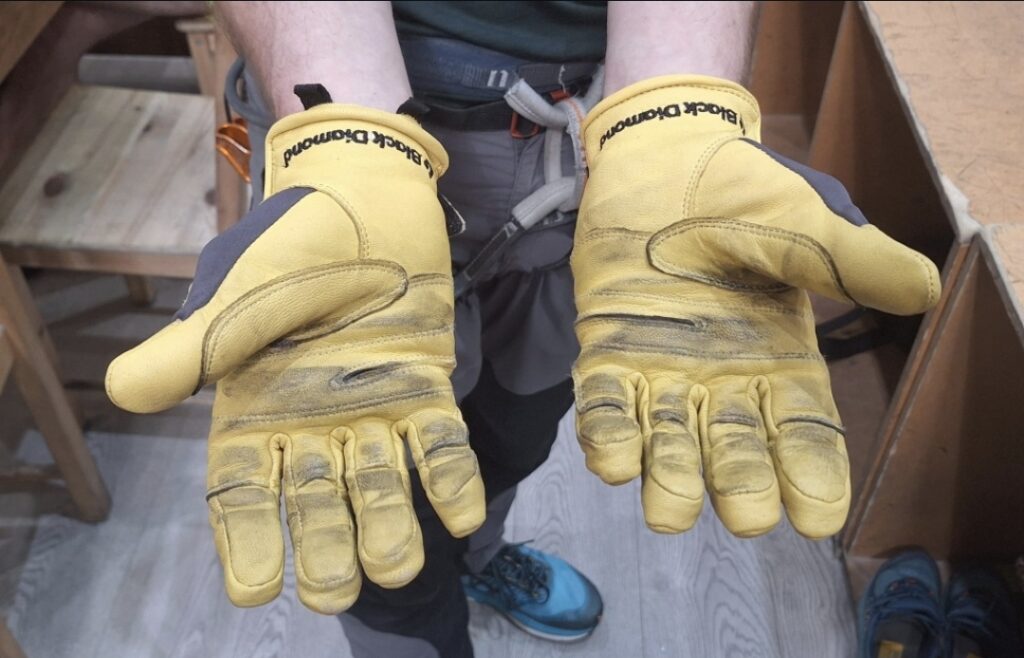
A few things became clear: consistency matters more than features, smooth rope handling is everything, fatigue exposes weaknesses quickly, and gloves make more of a difference than you’d expect.
And maybe the biggest takeaway is this:
The best gear is the gear that helps someone else keep going.
Massive credit to Cristal for the effort, endurance, and determination it took to complete all 56 routes. It was seriously impressive to watch. Thank you for the Gloves and Neox.
You sure earned a slice of Bakewell